
Hydrant system installs, alterations and commission testing across the Hunter
New pipework, valves and outlets, and a commission test before the system goes into service.
We install hydrant systems to AS 2419.1, alter existing ones and do the commission testing, on commercial and strata sites from Maitland to Newcastle, Lake Macquarie and Tea Gardens.
The three kinds of hydrant work we do
What you see on a hydrant booster set-up
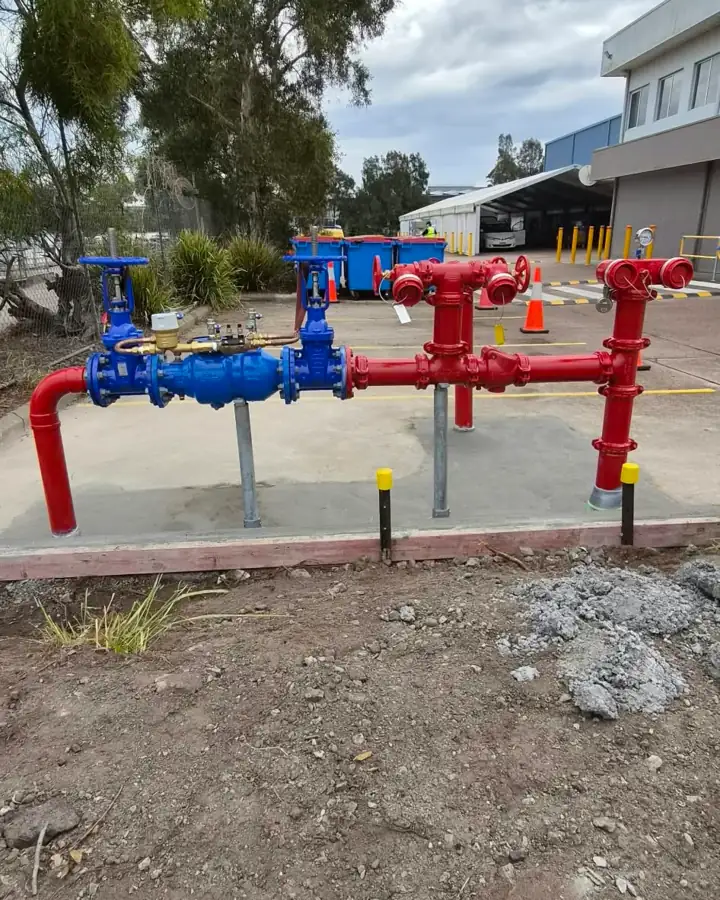
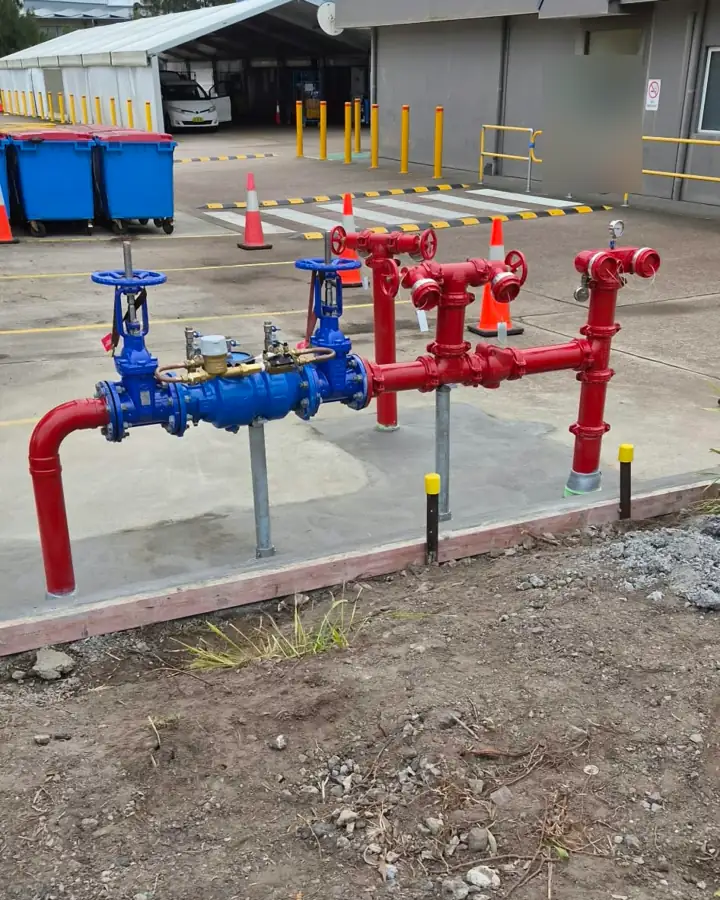
This hydrant booster set-up sits on a new concrete pad beside a car park. The pipe comes up out of the ground on the left, runs through the blue valves and into the red hydrant pipework and outlets, all standing on galvanised supports.
The blue valves are the backflow prevention. Water in fire pipework can sit still for months, and the backflow valve set stops it running back into the drinking water main. Hunter Water requires every property connected to its supply to be risk assessed and fitted with the right containment device, and a testable device has to be tested after it goes in and every year after that.
How a hydrant install job runs
Match the drawings to the site
Each hydrant system is designed for its building. Before any digging, the plans are checked on site: where the supply connects, where the pipe runs, where the hydrants and booster go.
Lay the pipework
Trenching, pipe and risers, set on supports, with the valves and hydrant outlets fitted.
Fit the backflow prevention
The backflow valve set goes on the supply side, so fire service water cannot flow back into the drinking water.
Pressure test the pipework
The new pipework is held under pressure to prove it holds, before the trenches are filled in and a leak becomes hard to find.
Commission test
Water is flowed at the hydrants and the pressure and flow are read against what the design calls for. The results are recorded.
Block plan and signs
The block plan and the boost and test pressure sign go up at the booster, and the compliance signs go on.
From then on the system is kept up with annual hydrant inspections and flow testing and Five yearly hydrant system services.
Hydrant installs, alterations and commission testing
- Standard
- AS 2419.1
- Work
- New systems, alterations, commission testing
- Buildings
- Commercial and strata
- After
- Annual inspections and flow testing
- Emergencies
- 24/7 emergency services
Commission testing before the system goes into service
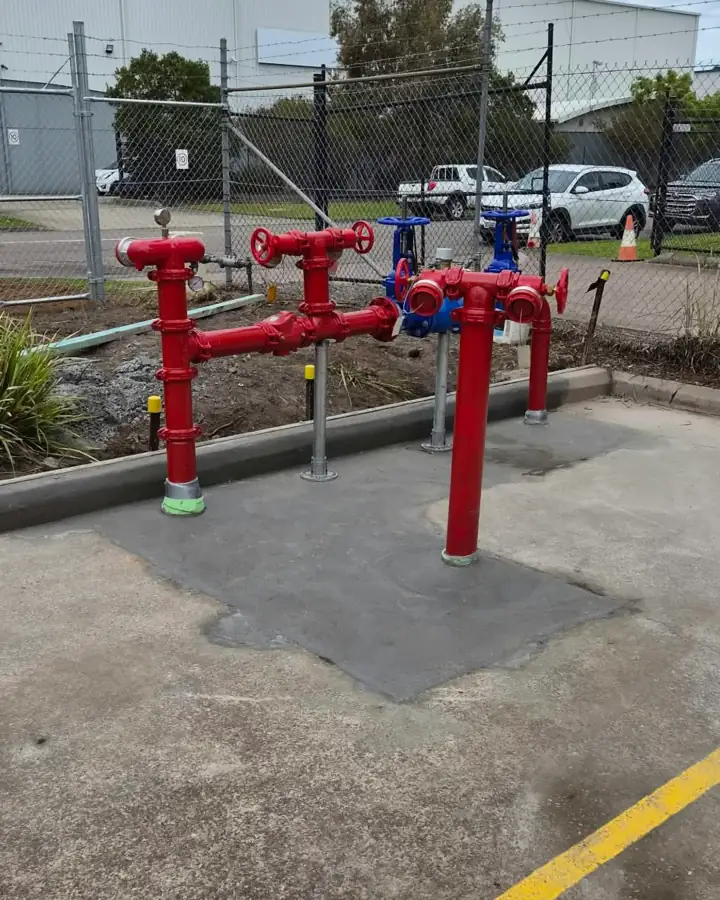
A new hydrant system, or an altered section of an old one, is tested before anyone relies on it. Commission testing flows water through the hydrants and checks the pressure and flow against the design. It happens once, at the end of the job. The routine testing under AS 1851-2012 carries on every year after.
What a commission test can turn up:
- Flow or pressure below the design at the hydrants furthest from the supply
- Joints, valves or outlets that leak once the system is under pressure
- Valves that are stiff, do not seal or have been left part closed
- A backflow device not yet tested and registered with Hunter Water
Found at commissioning, each one is fixed before handover. Found during a fire, it is a hydrant that cannot deliver the water.
Changing an existing hydrant system
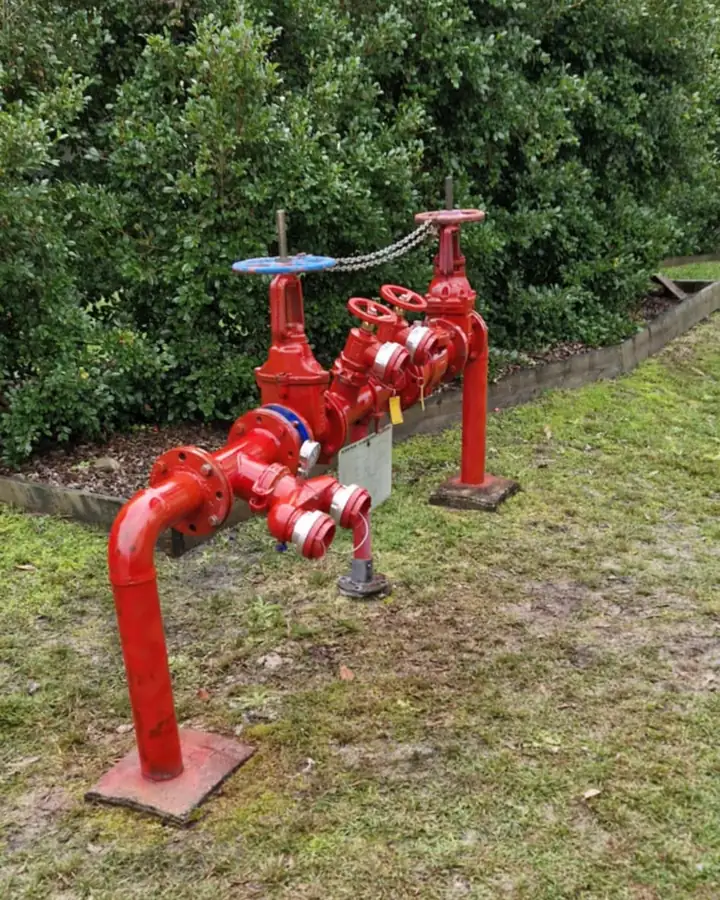
Buildings change, and the hydrant system has to change with them. Common reasons a system gets altered:
- An extension or new fit out that needs hydrant coverage in a new area
- A hydrant or booster moved to make way for new works
- Damaged or worn valves and outlets replaced
- Repairs after an annual flow test or a five yearly service finds a fault
- A backflow valve set added to the supply or replaced
An altered section is pressure tested and commission tested before the system goes back into service. Commercial fit off alterations are on our list too.
From our Thornton base
Hydrant systems go into commercial, industrial and strata buildings, like the business parks around Beresfield on the New England Highway, next door to Thornton. An install means more than one visit, so drive time matters.
| Maitland | about 15 min |
|---|---|
| Raymond Terrace | about 15 min |
| Newcastle | about 30 min |
| Lake Macquarie (Toronto) | about 34 min |
| Tea Gardens | about 51 min |
Common questions
How is commission testing different from the annual flow test?
Commission testing is done once, when a system is new or has just been altered, to show it performs as designed before it goes into service. The annual inspection and flow test is routine servicing under AS 1851-2012 for the rest of the system's life. We do both, so the same people can install a system and keep testing it.
Can you add or move a hydrant on our existing system?
Yes, fire hydrant installs and alterations are part of our work. Send us a photo of the block plan at your booster and a short note on what is changing, and we will work out the job from there.
What are the blue valves on the install?
They are the backflow prevention on the water supply to the hydrant system. They keep water that has been sitting in the fire pipework out of the drinking water main. Backflow testing and installs are part of our work too.
Does the backflow device on a fire service need testing?
In the Hunter Water area, yes. A testable backflow device has to be tested after it is installed and then every year, and registered with Hunter Water. The details are on Hunter Water's device registration and testing page.
Can you do the block plan and signs for a new system?
Yes. Block plans and compliance signs are on our list, so the plan at the booster can go up as part of the same job.
Someone has hit a hydrant or the pipework is leaking. Who do I call?
Us, on 0474 659 574. Keep people and vehicles clear of the water and leave the valves as they are until we're on the phone. We're open 24 hours, 7 days.
Related fire services
Hydrant installs across Maitland, Newcastle, Lake Macquarie, Raymond Terrace, Tea Gardens, the Hunter Valley and surrounds.
- AS 2419.1, Fire hydrant installations, Part 1: System design, installation and commissioning, Standards Australia.
- AS 1851-2012, Routine service of fire protection systems and equipment, Standards Australia.
- Backflow prevention, Hunter Water.
- Device registration and testing, Hunter Water.