
Rainwater pumps, tanks and downpipes in Maitland and the Hunter
Tank water only helps once it reaches the tap. We look after the pump, the tank's pipework and the downpipes that fill it.
Rainwater pumps and tanks, and downpipes, are part of our plumbing work for homes around Thornton, Maitland, Newcastle, Lake Macquarie, Raymond Terrace and Tea Gardens.
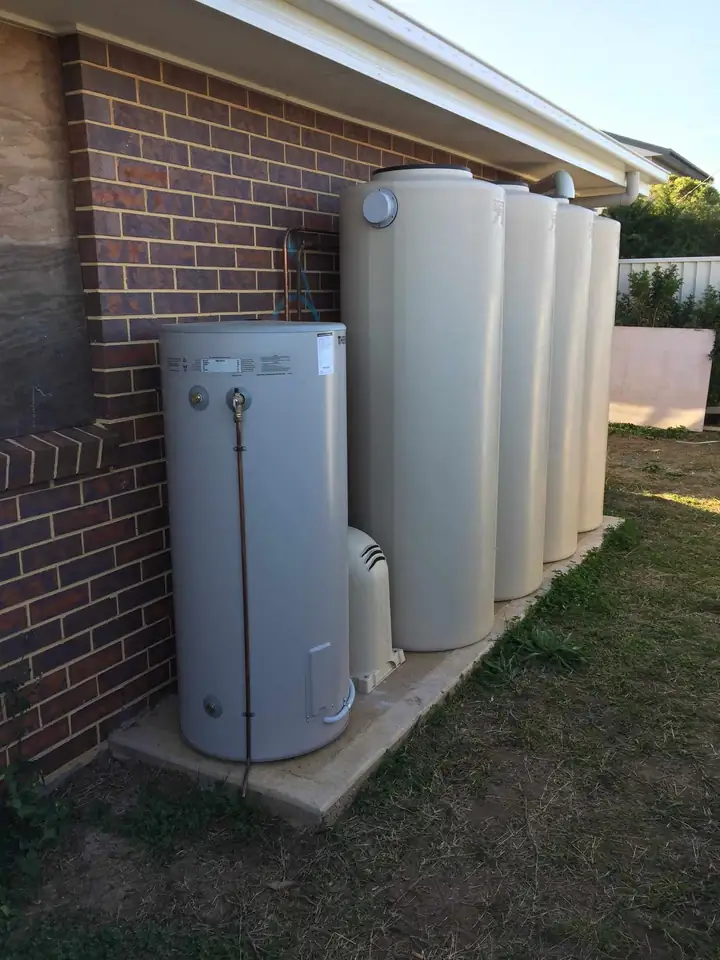
Pumps, tanks and downpipes
Three parts of one system. When one of them is wrong the tank sits full and the tap runs dry, or the tank never fills at all.
From your roof to your taps
Roof and gutters
The roof is the catchment. Leaves and sludge left in the gutters end up in the tank, and NSW Health suggests clearing them every three or four months.
Downpipes
Only the roof whose downpipes reach the tank can fill it. A cracked, blocked or disconnected downpipe sends that water down the wall and into the garden bed instead.
First flush and screens
A first flush diverter holds back the dirtiest water from the start of a storm. Fine insect screens on the inlet and overflow keep mosquitoes out of the tank.
Tank and overflow
When the tank is full, the overflow needs a proper path to the stormwater, not a spill at the base of the tank or against the house.
Pump
The pump turns stored water into pressure at the tap. It should start when a tap opens and stop when it closes, and nothing in between.
Town water backup
A mains switch or top-up valve keeps the toilets and laundry running through a dry spell. Where a property has both, tank water must never flow back into the town supply. That is backflow prevention.
What goes wrong, and what it usually means
| The pump starts on its own with every tap shut | Usually a leak somewhere on the tank line, or a pressure tank or valve that no longer holds pressure. Left alone, the pump wears itself out. |
|---|---|
| The pump runs but nothing comes out | The tank may be empty, or the pump has lost its prime. Running dry can damage a pump. |
| The toilets stop filling in a dry spell | The tank is empty and there is no town water backup, or the switch that brings it in has stopped working. |
| Gutters overflow in a heavy storm | Often a blocked downpipe or a choked leaf guard at the top of it. |
| Water pools at the base of the tank | The overflow isn't piped away, or a fitting on the tank is leaking. |
| The tank level never seems to rise | Downpipes disconnected or split, so part of the roof is draining somewhere else. |
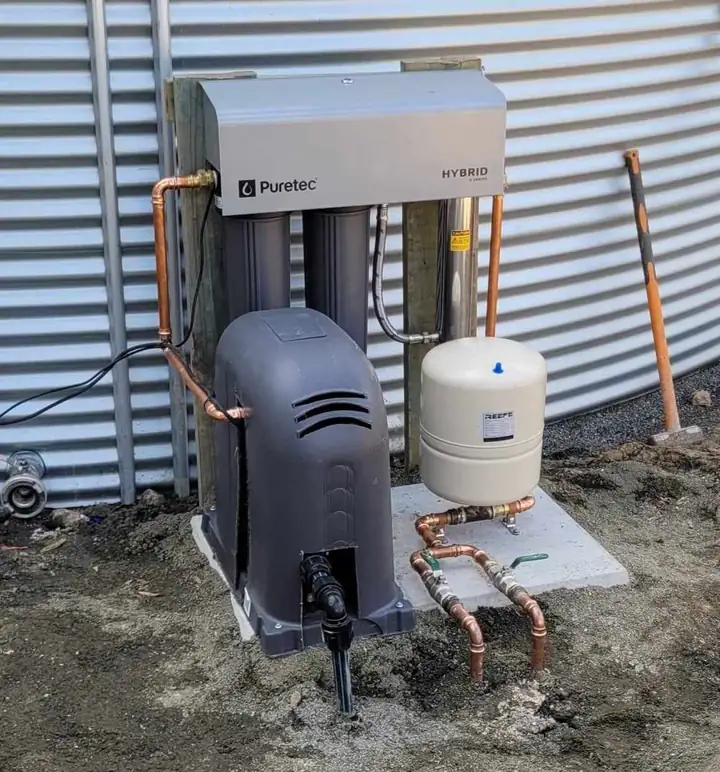
Tank and pump set-ups
What the pump has to do depends on what the tank is for.
External or submersible pump
| Pump | Where it sits | Getting to it | Worth knowing |
|---|---|---|---|
| External pump | On a slab beside the tank, usually under a cover | Easy to reach for a service or a swap | You'll hear it run, so it's best kept away from bedroom windows |
| Submersible pump | Inside the tank, under the water | Lifted out through the top of the tank | Quiet and out of sight, and it needs enough water above it to stay covered |
How much rain lands on your roof
One millimetre of rain on one square metre of roof is one litre of water. The Bureau of Meteorology's East Maitland gauge, next to Thornton, averaged about 894 mm a year, so even a modest roof sees a lot of water.
A tank only catches part of it. Any roof not piped to the tank, the first flush and a full tank's overflow all miss out, which is why the downpipe layout matters as much as the tank size.
Rainwater work from Thornton
| Chisholm and Woodberry | Next door, about 5 to 6 km |
|---|---|
| Maitland | About 12 km |
| Raymond Terrace | About 14 km |
| Newcastle | About 26 km |
| Toronto, Lake Macquarie | About 38 km |
| Tea Gardens | About 62 km, and surrounds |
| Hours | Open 24 hours, 7 days |
| Phone | 0474 659 574 |
- 5.0 on Google from 37 reviews (September 2026)
- Company plumbing licence 488039C, fully insured
- Family owned and operated
Handy when you call
- What the pump is doing, or not doing
- Whether the house is also on town water
- The make and model on the pump's label
- Roughly how big the tank is
Common questions
Why does my rainwater pump keep turning on by itself?
With every tap shut, a pump that keeps starting is usually chasing a leak on the tank line, or a pressure tank or valve that can't hold pressure any more. It's worth finding before the pump wears out. Call 0474 659 574.
What happens to the toilets when the tank runs dry?
With a town water backup, a mains switch or top-up valve takes over and the toilets keep filling. Without one, they stop until it rains. NSW guidance for new homes suggests setting any top-up valve low in the tank, within 300 mm of the base, so the tank keeps most of its room for rain.
Should we drink our tank water?
If you're on town water, NSW Health recommends it for drinking and cooking. Tank water suits the toilets, laundry and garden. If the tank is your only supply, keep the gutters, screens and first flush clean, and ask us about water filters.
How often should gutters, screens and the tank be checked?
NSW Health suggests clearing gutters every three or four months, checking insect screens at least once a year, and looking for sediment at the bottom of the tank every six to twelve months.
Can you connect our downpipes to a new tank?
Yes. Downpipes are part of our plumbing work, for tanks and for stormwater. The more roof that drains to the tank, the more it collects, so we'll look at which downpipes can reach it.
Our pump has stopped at night. Can someone come out?
Yes. We're open 24 hours, 7 days. Ring 0474 659 574 and tell us what the pump is doing and whether the tank has water in it.
Do you do rainwater work at Tea Gardens?
Yes. Tea Gardens and surrounds is in our service area, about 62 km from Thornton, so ring ahead and we'll line up a time.
Related plumbing
-
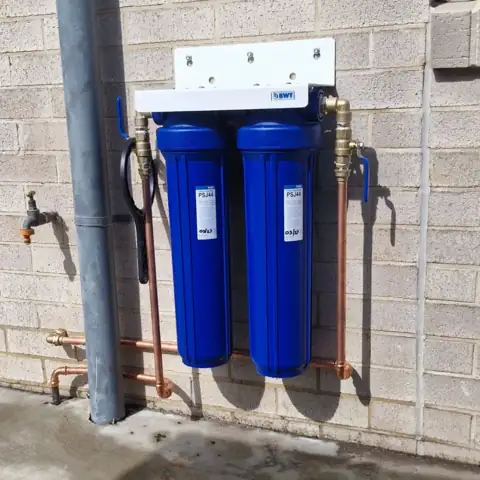 Water filtersFor a tank that supplies the house.
-
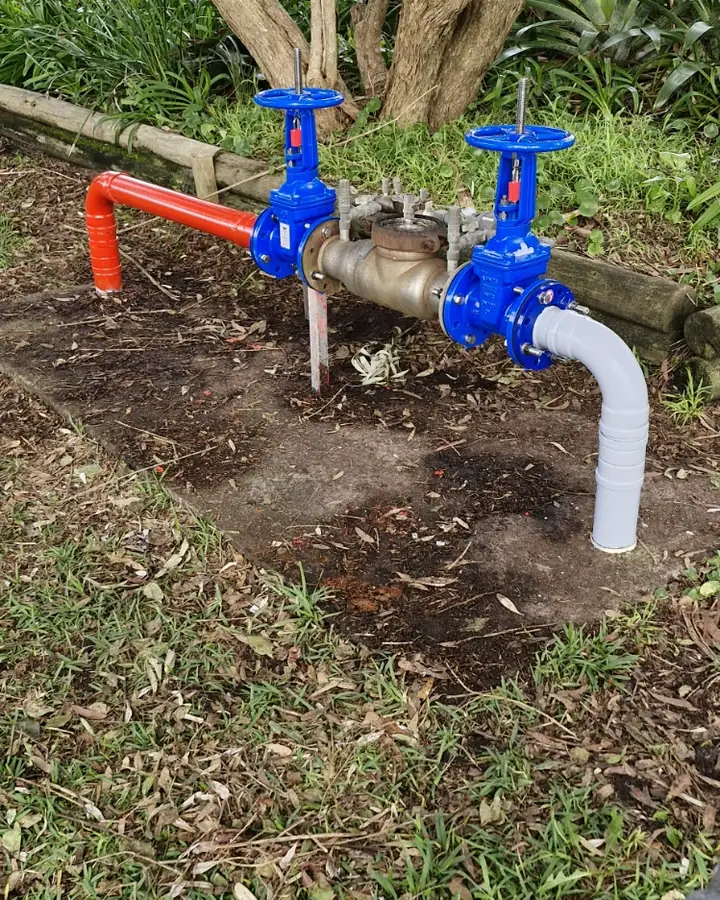 Backflow testingKeeping tank and town water apart.
-
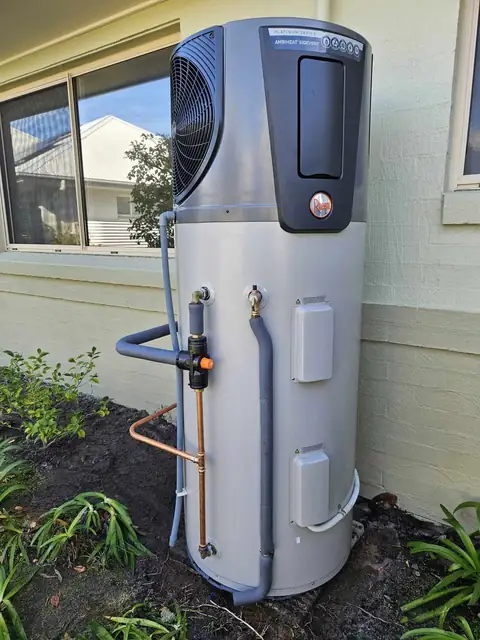 Hot waterElectric, heat pump, solar and gas systems, fixed or replaced.
- Blocked drainsDownpipes and stormwater that won't clear.
- Rainwater tanks, NSW Health.
- BASIX: rainwater tank size, NSW Planning Portal.
- Rainfall: Bureau of Meteorology climate statistics, East Maitland Bowling Club 061034 (1902 to 1994), Maitland Visitors Centre 061388 (1997 to 2016), Cessnock Airport AWS 061260 (1968 to 2026), Newcastle Nobbys 061055 (1862 to 2026) and Nelson Bay (Nelson Head) 061054 (1881 to 2023).
- Backflow prevention, Hunter Water.