AS 2419.1:2021 hydrant commission testing: what it is, when a system needs it and what each test shows
Finishing a new hydrant install or an alteration? The system needs commission testing before it goes into service. Here is what commission testing is, when a system needs it, what each test in our package shows, and the paperwork, block plan and signs you get at the end.
What commission testing is
A hydrant system is what the fire brigade relies on at a fire. Before a new one goes into service, or an altered one goes back into service, it is tested as a whole: the pipework, the booster and the hydrants, with the results on paper for the fire certifier.
It is a one-off, done at the end of the job. After handover the system is looked after under AS 1851-2012, starting with annual hydrant inspections and flow testing.
When a system needs it
- A new hydrant install. The whole system is tested before the building relies on it.
- An alteration. A hydrant added or moved, a main extended or rerouted, valves replaced. The altered section is pressure tested and commission tested before the system goes back into service.
If you are a builder, a fire safety provider or a building owner with a job like this nearing completion, book the testing early. The pressure test is easiest while the pipework is still in view, before a trench is backfilled or a wall is lined.
Our commission testing package
Country to Coast offers a complete hydrant system commission testing package that meets the requirements of AS 2419.1:2021. It covers:
- Hydrostatic pressure test of the pipework at 1700 kPa or 1.5 times the maximum working pressure, whichever is greater, typically held for 2 hours (5 hours for PE pipe)
- Pump appliance booster flow test, to show the system can be boosted and to set the site's boost pressure
- Unassisted mains pressure flow tests at the most hydraulically disadvantaged hydrants, to show the system meets its design flow
- Commissioning certificates and flow reports to submit to your fire certifier
- Block plans drafted, made and installed to match the system as built or altered
- Boost and test pressure signs, and every other compliance sign the system needs
- A full system inspection, with 003 locks and chains supplied, so it is compliant for handover
What each test shows
The hydrostatic pressure test: does the pipework hold?
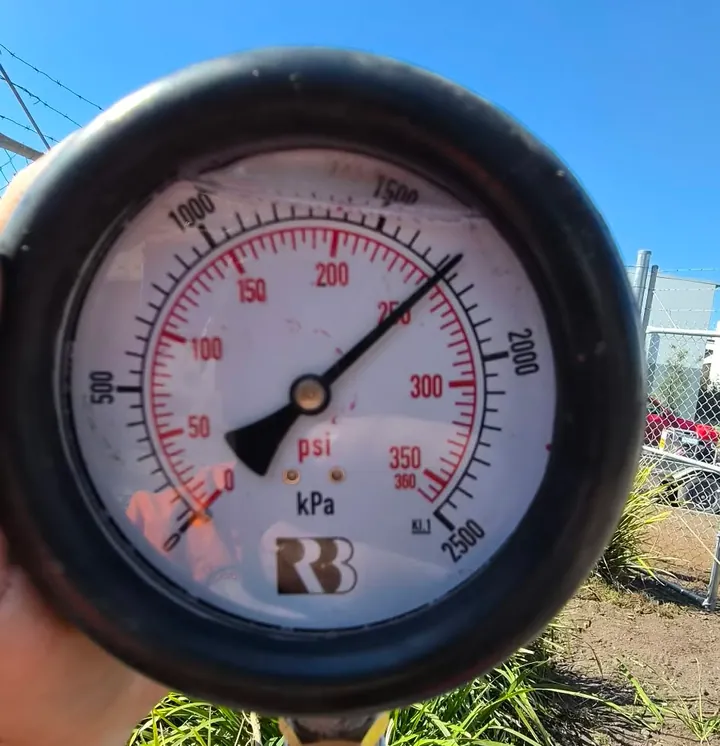
The pipework is filled with water and taken up to the test pressure: 1700 kPa or 1.5 times the maximum working pressure, whichever is greater. It is then held, typically for 2 hours, or 5 hours for PE pipe. With the pump off, the gauge should stay flat. A needle that falls means water is getting out somewhere, and the leak is found and fixed before handover.
The test pressure goes on the system's boost and test pressure sign, so the next person to test it knows the figure. More on how the test runs: hydrostatic pressure testing.
The pump appliance booster flow test: can the system be boosted?
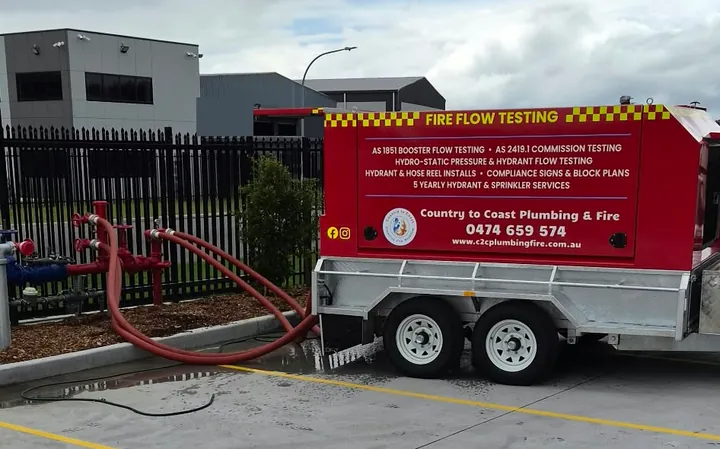
At a fire, the brigade's truck pumps water into the booster to push it through to the hydrants. On a booster flow test, the pump on our trailer stands in for the truck. The test shows the system can be boosted, and it sets the site's boost pressure: the figure that goes on the sign at the booster, so the brigade knows how hard to pump. More on the test itself: pump assisted booster flow testing.
The unassisted mains pressure flow test: does it meet its design flow?
This one runs on the water supply alone, with no pump. The flow tests are done at the most hydraulically disadvantaged hydrants: the ones where the supply has the hardest job, such as those furthest from it. Good results there show the system meets its design flow.
What you get at handover
- Commissioning certificates and flow reports, ready to submit to your fire certifier.
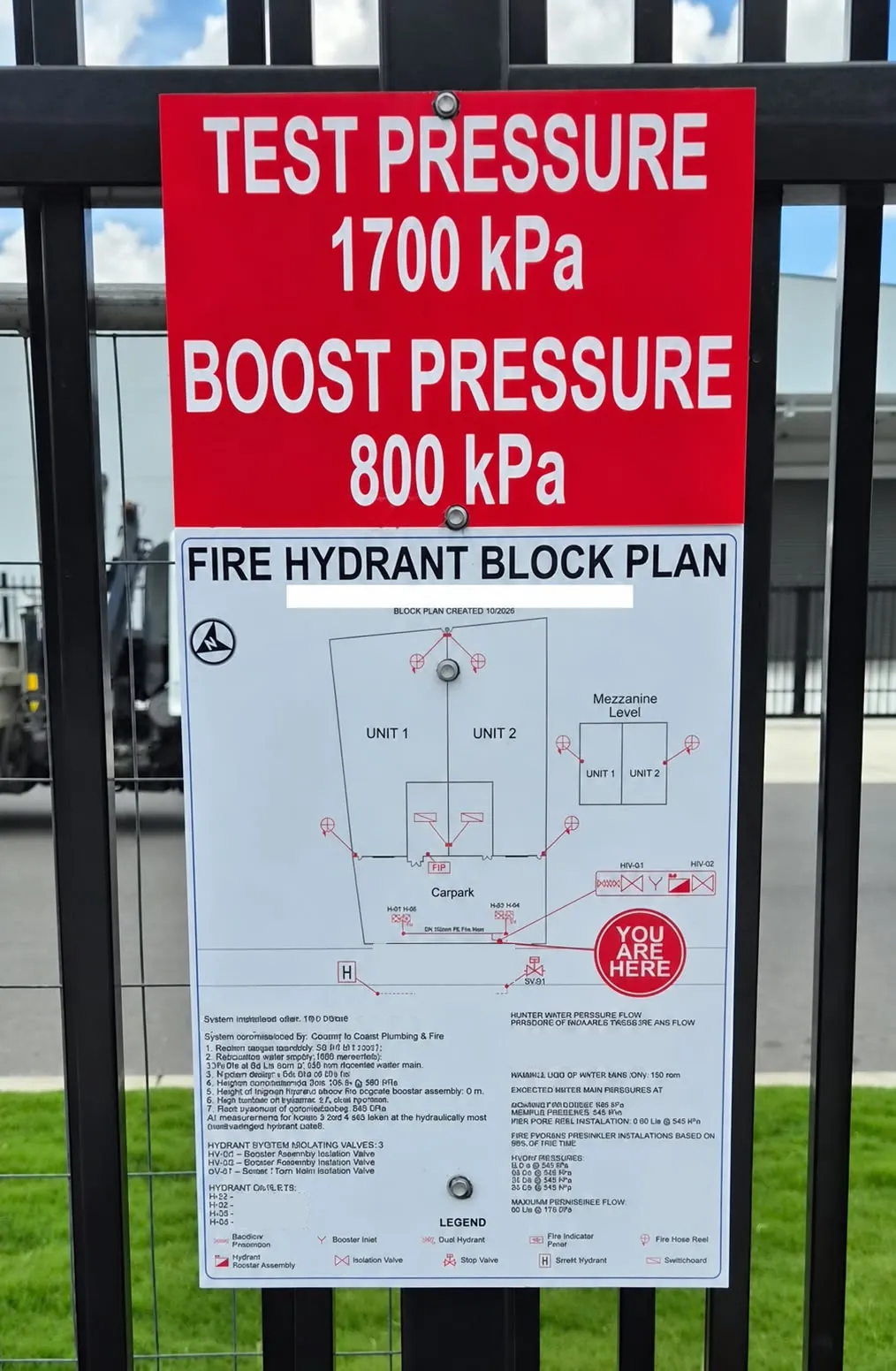
- A block plan drafted, made and installed at the booster, matching the system as built or altered. It shows the brigade where the hydrants, booster and valves are. See block plans and compliance signs.
- A boost and test pressure sign, and every other compliance sign the system needs. On the board in the photo, the test pressure reads 1700 kPa and the boost pressure 800 kPa.
- A full system inspection, with 003 locks and chains supplied, so the system is compliant for handover.
Installs and commission testing from the same team
We also do the install and alteration work itself: hydrant system installs, alterations and commission testing. Doing both means the people who put the pipework in can test it, draw the block plan and put up the signs, all as one job.
The tests, pressures and hold times in this guide are Tim's own, from the commission testing Country to Coast does. What your system needs is set by its design and its approval.
Project nearing completion, or pricing a new install?
Ask us for a free, no-obligation quote on your next commission test. We do the complete package across Newcastle, Maitland, Lake Macquarie, the Hunter and the Central Coast.
Call 0474 659 574 Ask about commission testing
Company plumbing licence 488039C, fully insured. Open 24 hours, 7 days.